
 Save to Pinterest
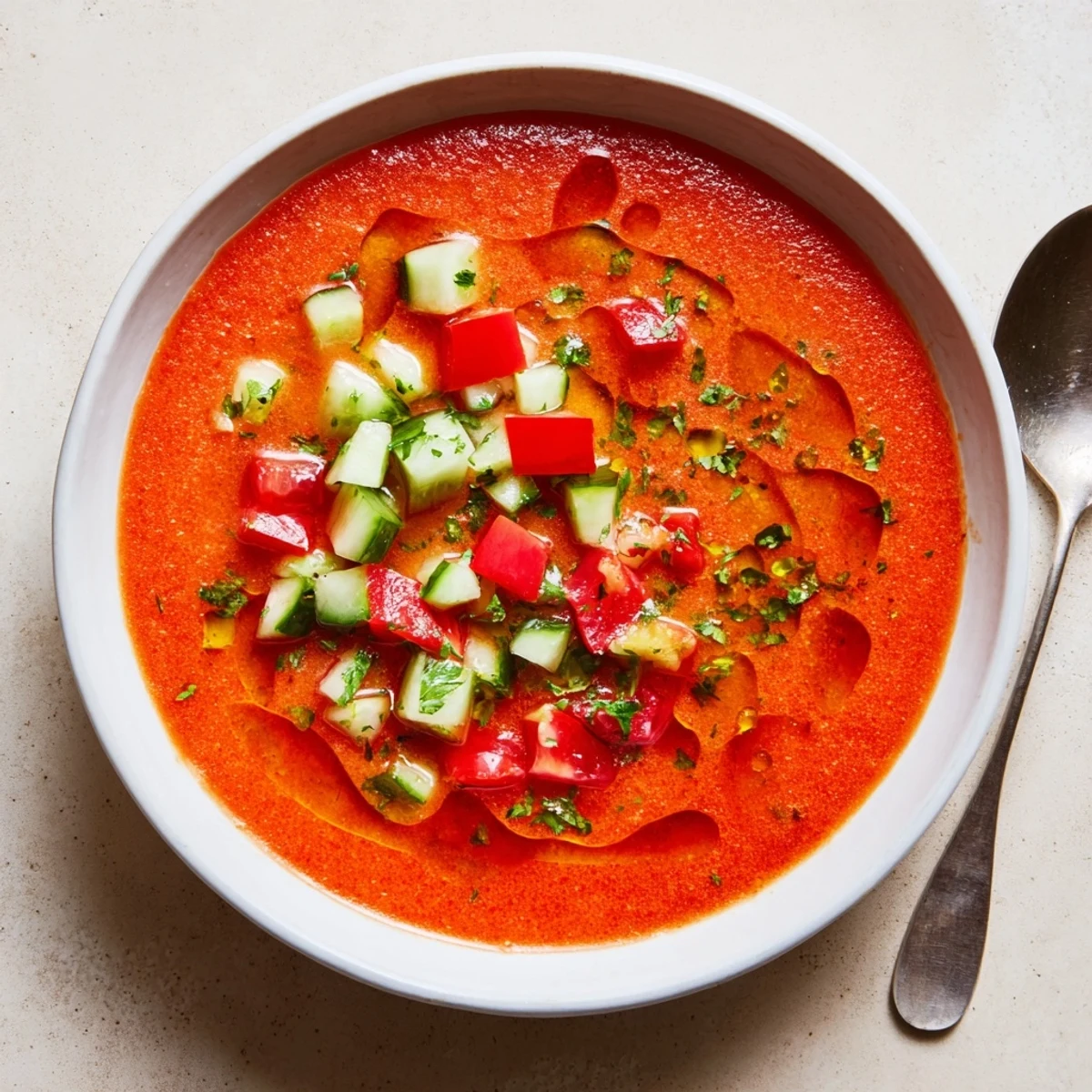
 This classic Spanish cold soup combines ripe tomatoes, crisp cucumber, red bell pepper, and aromatic herbs for a vibrant summer dish. The blend of sherry vinegar and extra-virgin olive oil creates a perfectly balanced, refreshing taste. Simply blend the vegetables, season well, and chill for at least two hours to let the flavors meld together.
The exhaust fan in my apartment broke during a July heat wave, and the thought of turning on any appliance felt criminal. That evening I threw tomatoes, cucumber, and whatever else was wilting in the crisper drawer into a blender, pressed the button, and walked away. Two hours later, spooning that cold rust colored liquid into my mouth straight from the fridge container, I understood why gazpacho has survived centuries of Spanish summers. It asks almost nothing of you and gives everything back.
I brought a thermos of gazpacho to a picnic once and friends kept asking what restaurant I had ordered it from, which might be the highest compliment a blended vegetable soup can receive.
Ingredients
- Ripe tomatoes (800 g): This is the soul of the soup, so buy the reddest, softest, most fragrant ones you can find and never refrigerate them before blending.
- Cucumber (1 medium): Peel and seed it to avoid any bitterness or waxy texture coming through in the final bowl.
- Red bell pepper (1 medium): Adds a sweetness that balances the acidity of the tomatoes beautifully.
- Red onion (1 small): Keep the amount modest because raw onion can quickly dominate every other flavor.
- Garlic cloves (2): Two is enough to notice without making the soup taste like a dare.
- Fresh parsley or cilantro (2 tbsp): Either works, though cilantro pushes the flavor slightly toward Latin American territory.
- Extra virgin olive oil (4 tbsp): Use the good stuff here since it is a raw ingredient and its fruitiness shines through.
- Sherry vinegar or red wine vinegar (2 tbsp): Sherry vinegar is more traditional and adds a nutty depth that regular vinegar lacks.
- Cold water (250 ml): Adjust the amount depending on how thick or thin you prefer your soup.
- Sea salt and black pepper: Season generously at first, then taste and adjust because cold food always needs more salt than you expect.
Instructions
- Toss everything raw into the blender:
- Add the tomatoes, cucumber, bell pepper, onion, garlic, and herbs. Pulse until the mixture looks mostly smooth with just a few flecks of texture remaining.
- Add the liquids and seasonings:
- Pour in the olive oil, vinegar, cold water, salt, and pepper, then blend again until everything is fully emulsified and the color is uniform.
- Taste and tweak:
- Dip a spoon in and decide if it needs more vinegar for brightness, more salt for depth, or more water to thin it out to your liking.
- Strain if you want elegance:
- Pass the soup through a fine mesh sieve using the back of a ladle, pressing firmly to extract all the liquid while leaving the pulp behind.
- Chill patiently:
- Transfer to a covered container and refrigerate for at least two hours so the flavors marry and the temperature drops to something genuinely refreshing.
- Serve with personality:
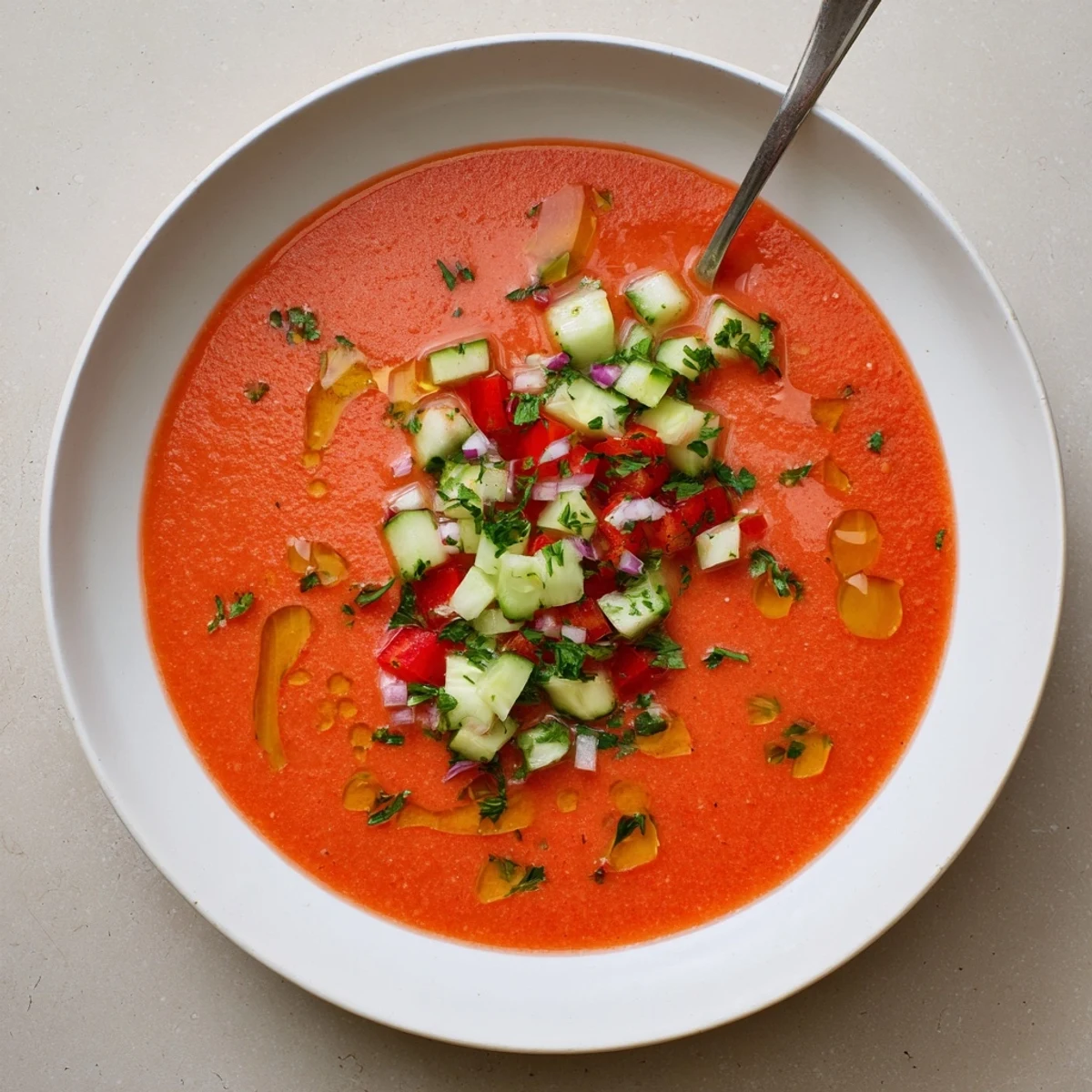
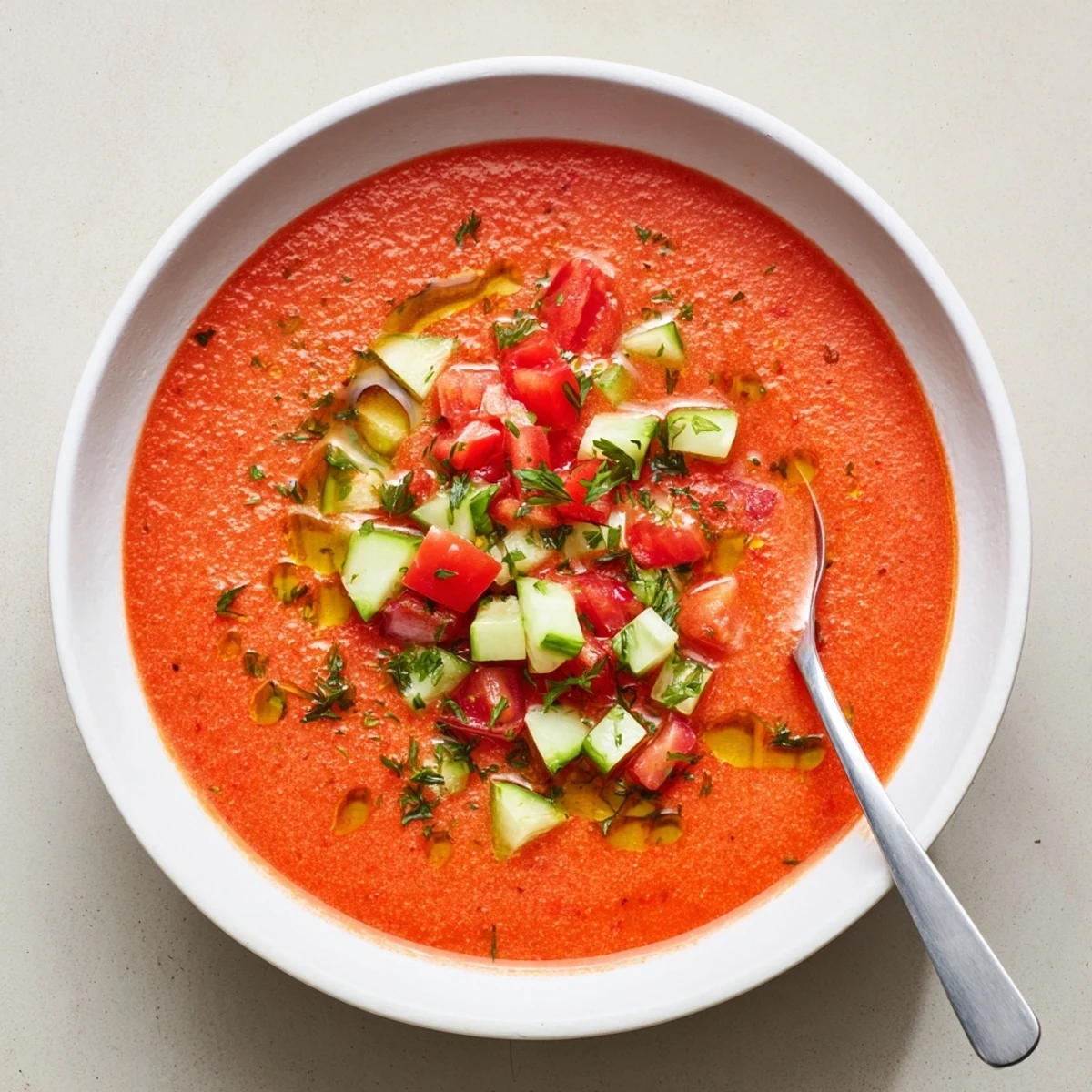
- Stir well, pour into shallow bowls, and finish with diced cucumber, a drizzle of olive oil, or whatever garnish makes you happy.
 Save to Pinterest
 A friend once told me that gazpacho tastes like drinking a garden, and now I cannot think of a better way to describe it.
What to Serve Alongside
Crusty bread is the obvious partner, either torn from a rustic loaf or toasted into rough croutons fried in olive oil. A glass of something cold and white alongside turns a bowl of soup into a proper meal without any additional effort.
Making It Your Own
A slice of stale bread blended into the base thickens the soup and gives it a creamier body, a trick that dates back to traditional Andalusian recipes. For a greener version, substitute tomatillos for half the red tomatoes and add a handful of spinach before blending.
Storing and Planning Ahead
Gazpacho keeps beautifully in the refrigerator for up to three days, and the flavor on day two is often better than day one because the ingredients have had time to settle into each other.
- Stir well before serving since separation is natural and nothing to worry about.
- Freeze leftovers in ice cube trays and drop them into bloody marys for a sneaky upgrade.
- Always taste for salt one more time right before serving because cold mutes flavor.
 Save to Pinterest
 Some evenings the best dinner is the one that required no heat, no patience, and no cleanup beyond rinsing a blender. Gazpacho is that dinner, and summer is when it shines brightest.
Common Questions
- → How long should gazpacho chill before serving?
-
Refrigerate for at least 2 hours to let the flavors develop and the soup to become thoroughly chilled. It can be made up to 24 hours in advance.
- → Should I strain the gazpacho?
-
Straining through a fine-mesh sieve creates a smoother, more refined texture. However, leaving it unblended gives a rustic, hearty consistency with more fiber.
- → What type of tomatoes work best?
-
Use the ripest, juiciest tomatoes available. Vine-ripened or heirloom varieties provide the sweetest, most intense flavor.
- → Can I make gazpacho ahead of time?
-
Yes, it actually tastes better after resting. Prepare up to 24 hours before serving and store covered in the refrigerator.
- → What garnishes work well with gazpacho?
-
Try diced cucumber, bell pepper, chopped herbs, croutons, or a drizzle of olive oil. Each adds texture and visual appeal.
- → Is gazpacho suitable for special diets?
-
This version is naturally vegetarian, vegan, and gluten-free. Omit croutons to keep it completely gluten-free.