
 Save to Pinterest
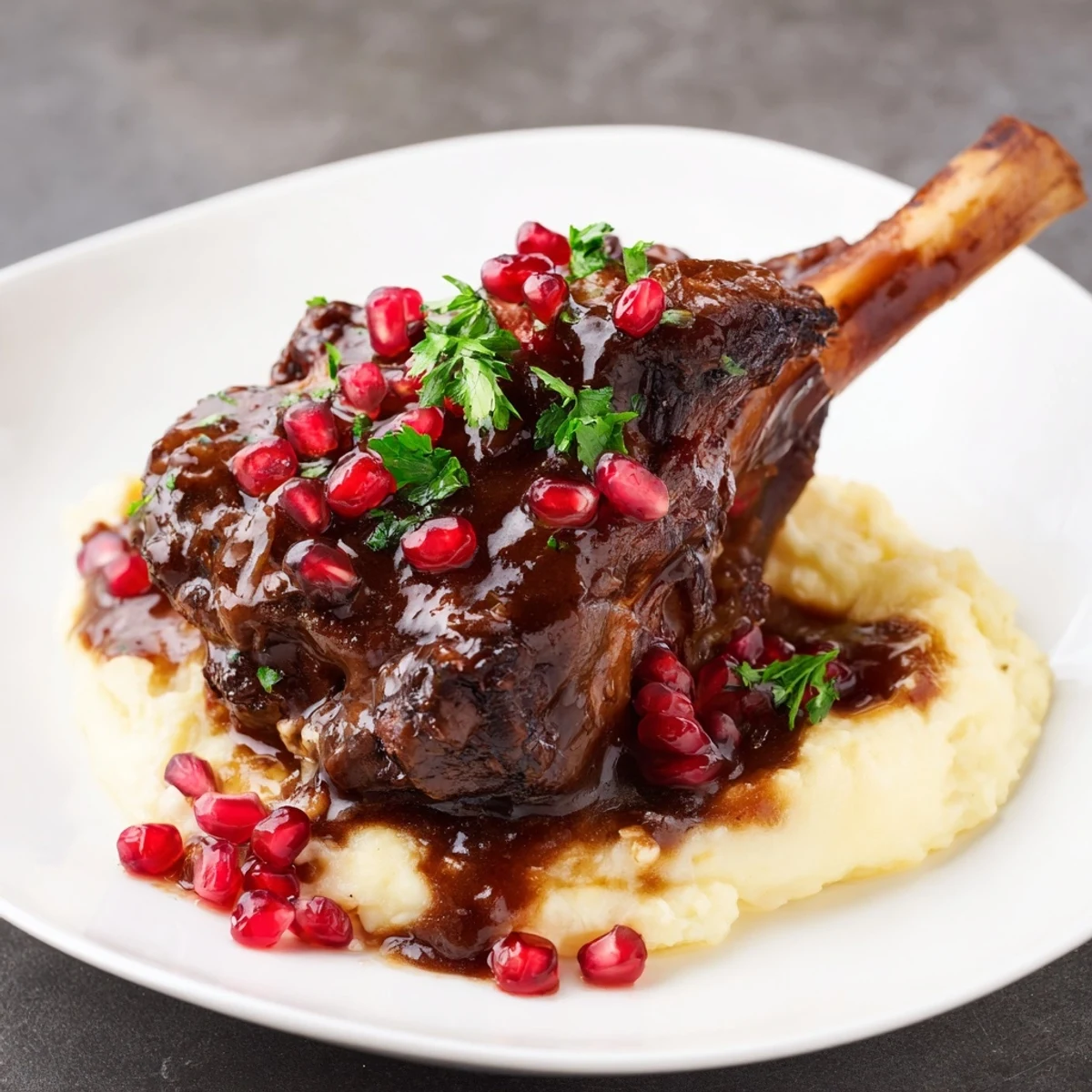
 Achieve melt-in-the-mouth lamb by searing the shanks first to build flavor. Slowly cook them with onions, carrots, and spices in a red wine and stock broth until tender. Finish by brushing the meat with a sticky, sweet pomegranate and honey glaze, then broiling until caramelized and glossy for a stunning presentation.
There's something about the smell of pomegranate molasses bubbling down in a pan that stops you mid-thought. I discovered it by accident, honestly—someone passed me a bottle at a market, and I spent weeks trying to figure out what to do with it besides the usual bowls of yogurt. Then one winter evening, I browned some lamb shanks with no real plan, just knowing they needed something bold. The moment that glaze hit the meat under the broiler, caramelizing into this dark, jeweled crust, I understood.
I made these for my sister's birthday dinner once, and everyone went quiet when they took that first bite. Not the usual dinner-party quiet, but the kind where people actually taste what they're eating instead of just making conversation. She still texts me about that meal, and I think that's when I realized this dish had moved beyond just being food I made well.
Ingredients
- Lamb shanks (4, about 350–400 g each): These are forgiving cuts that actually improve with time in the oven, getting more tender as they braise. Don't trim all the fat—it keeps them moist and rich.
- Olive oil (2 tbsp): Use good oil for the sear, not your fancy finishing oil.
- Onion, garlic, carrots, celery (1 large onion, 4 cloves, 2 carrots, 2 stalks): This is your flavor foundation; don't rush the soften step or skip it.
- Ground cumin and coriander (1 tsp each): Toast these for a second in the hot pan if you can—it wakes them up.
- Ground cinnamon and smoked paprika (1/2 tsp each): The cinnamon is subtle but essential; it rounds out the spice profile.
- Bay leaves and fresh thyme (2 bay leaves, 4–5 sprigs): Fresh thyme is better if you have it, but dried works in a pinch.
- Beef or lamb stock and dry red wine (400 ml stock, 250 ml wine): The wine matters here—don't use something you wouldn't drink.
- Tomato paste, pomegranate molasses, honey (2 tbsp tomato paste, 2 tbsp molasses, 1 tbsp honey): These three together create the braising liquid's depth; they're not interchangeable.
- Pomegranate molasses for the glaze (3 tbsp) and honey (1 tbsp): This second measure of molasses is where the magic happens.
- Pomegranate seeds and fresh parsley (1/2 cup seeds, 2 tbsp parsley): Add these just before serving so the seeds stay bright and crisp.
Instructions
- Get your oven ready and dry your meat:
- Preheat to 160°C (325°F). Pat the lamb shanks completely dry with paper towels—this is how you get that proper brown crust, not steam. Season generously with salt and pepper on all sides; don't be shy.
- Sear for color and flavor:
- Heat the oil in a large Dutch oven over medium-high heat until it shimmers. Working in batches if needed, sear each shank for about 2 minutes per side until deep brown all over. You'll hear them sizzle and smell that savory caramelization—that's the good stuff. Set them aside once they're done.
- Build your flavor base:
- Lower the heat to medium and add your chopped onion, garlic, carrots, and celery. Stir occasionally for 6 to 8 minutes until the vegetables start to soften and smell sweet. The kitchen should smell alive now.
- Wake up the spices:
- Add the cumin, coriander, cinnamon, smoked paprika, bay leaves, and thyme. Stir constantly for about 1 minute—you want the heat to release those aromatics without burning them. You'll notice the smell shift into something warmer and more complex.
- Add the liquid and return the lamb:
- Stir in the tomato paste, pomegranate molasses, and honey, coating everything. Pour in the wine and stock slowly, scraping the bottom of the pan with a wooden spoon to lift all that browned, flavorful fond. Bring it to a simmer, then nestle the lamb shanks back in, making sure they're mostly submerged.
- Braise low and slow:
- Cover the pot and transfer it to the oven. Let it cook for 2 to 2.5 hours, turning the shanks once or twice if you remember. The meat is ready when it pulls back from the bone and a fork slides through with almost no resistance. This is not a dish to rush.
- Prepare the glaze:
- While the lamb finishes its final stretch, combine the pomegranate molasses and honey in a small saucepan. Warm it over low heat for 2 to 3 minutes, stirring gently, until it thickens slightly and coats the back of a spoon.
- Finish with a broil:
- Remove the lamb shanks and place them on a large plate. Brush the glaze generously over each one. Heat your broiler to high and place the shanks on a baking tray underneath for 3 to 5 minutes, watching carefully, until the glaze darkens and caramelizes. The edges should look almost glossy and slightly blackened—that's when you know it's right.
- Serve with style:
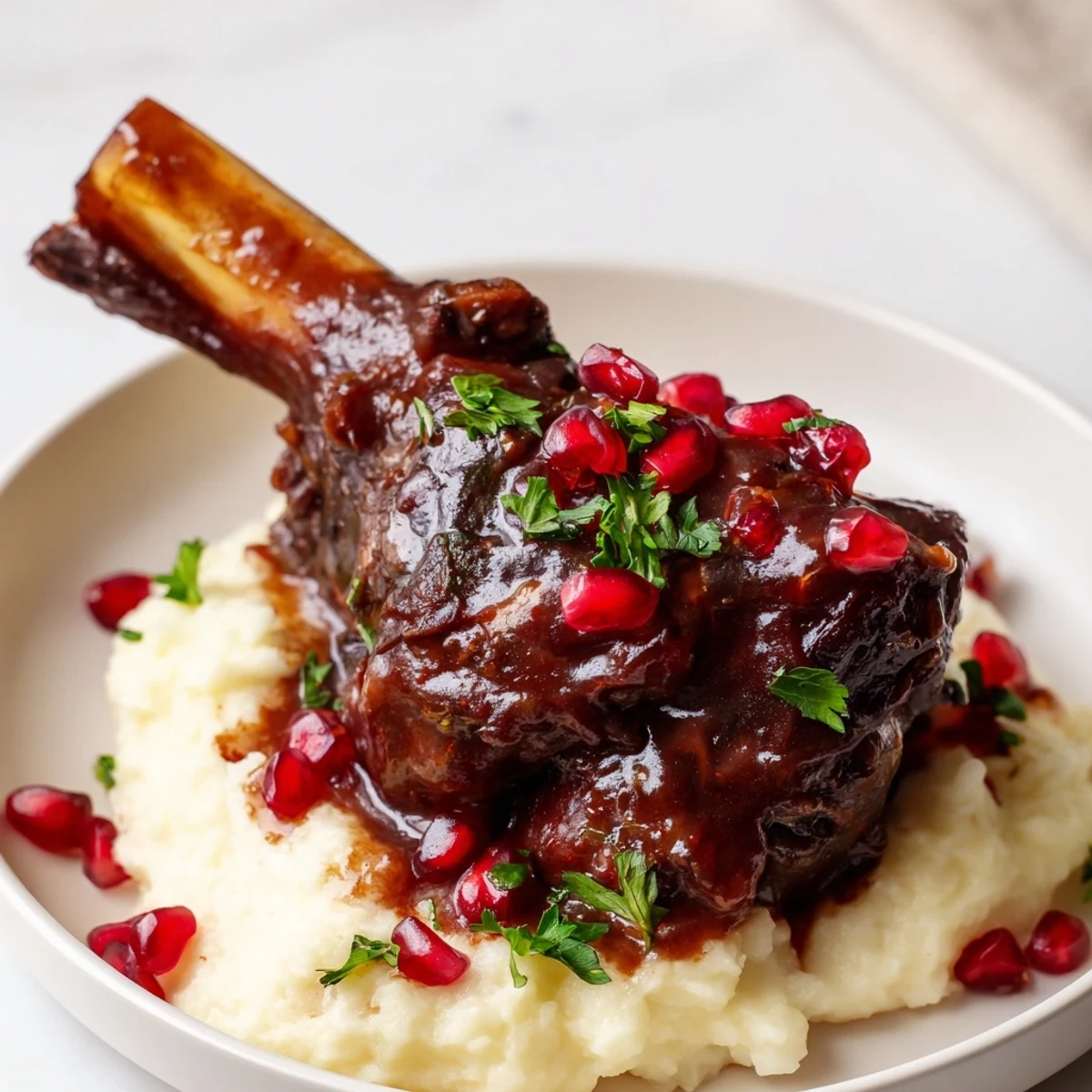
- Place each shank on a bed of pilaf or mashed potatoes, then drizzle the reduced braising liquid around it. Top with a scatter of pomegranate seeds and fresh parsley just before serving.
 Save to Pinterest
 I've served this dish to people I barely knew and people I've known my whole life, and it always creates the same effect—a moment where the table quiets and someone says something like, 'Did you really make this?' That feels like a small kind of magic, and it's why I keep coming back to it.
Why Pomegranate Molasses Changes Everything
Pomegranate molasses is tangy, slightly funky, and nothing like the sweet fruit you eat fresh. It's the ingredient that transforms this from a nice braised lamb into something that tastes like it came from a spice market in Beirut or Istanbul. The acidity cuts through the richness of the meat while the molasses itself adds a dark, almost mysterious sweetness. Once you bring it into your cooking, you'll start finding reasons to use it everywhere—in glazes for roasted vegetables, drizzled over hummus, even stirred into a yogurt sauce.
Timing and Temperature Matter
The low oven temperature—160°C instead of the higher heat some recipes call for—is what gives you that tender, yielding meat that almost dissolves on your tongue. Rush it with higher heat, and you'll end up with meat that's technically cooked but still has a slight toughness. The two to two and a half hours is also a real timeline, not something to cut short. Start this dish with time on your side, not stress.
Wine Choice and What Comes After
The wine you use in the braising liquid will greatly influence the final flavor—a bold Shiraz or Cabernet will give you depth and tannins that work beautifully with the molasses, while a lighter wine might get lost. The same wines that work in the pot are exactly what you should pour with dinner. The pomegranate's tartness and the wine's structure speak the same language, and there's no complicated wine pairing to stress about.
- If you find pomegranate molasses intimidating, look for it online or at any Middle Eastern grocery store; it's worth the small effort to source it properly.
- This dish is even better the next day—the flavors have more time to meld, and reheating is as simple as covering and warming in a low oven.
- Add a strip of orange zest to the braising liquid if you want a subtle citrus note that won't overpower the molasses.
 Save to Pinterest
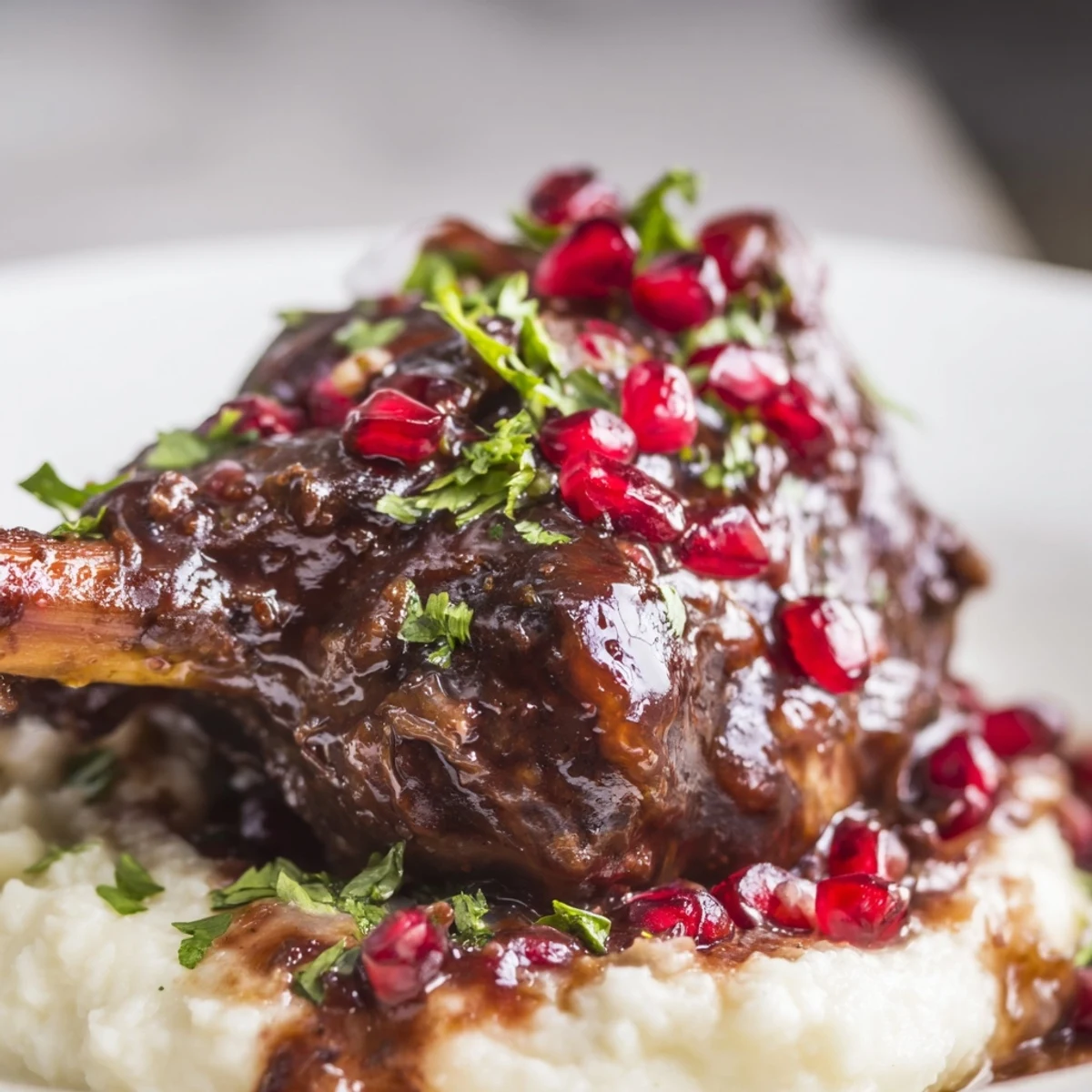
 This is the kind of dish that deserves an unhurried evening and people who actually want to be there. Serve it with something simple alongside—mashed potatoes or rice—and let the lamb and that glaze do the talking.
Common Questions
- → How do I know when the lamb is fully cooked?
-
The lamb is ready when the meat is fork-tender and pulls away from the bone easily without much resistance.
- → Can I use beef stock instead of lamb stock?
-
Yes, high-quality beef stock works beautifully as a substitute if you do not have lamb stock available.
- → What sides pair best with this dish?
-
This pairs wonderfully with fluffy pilaf, creamy mashed potatoes, or roasted root vegetables to soak up the sauce.
- → Can I cook this on the stovetop instead of the oven?
-
Yes, keep the heat low and simmer gently on the stovetop for about 2.5 to 3 hours, checking occasionally to ensure the liquid doesn't evaporate too quickly.
- → Is pomegranate molasses necessary for the glaze?
-
It provides the signature tangy flavor. If unavailable, you can substitute with balsamic vinegar mixed with a little sugar, though the flavor profile will change slightly.