
 Save to Pinterest
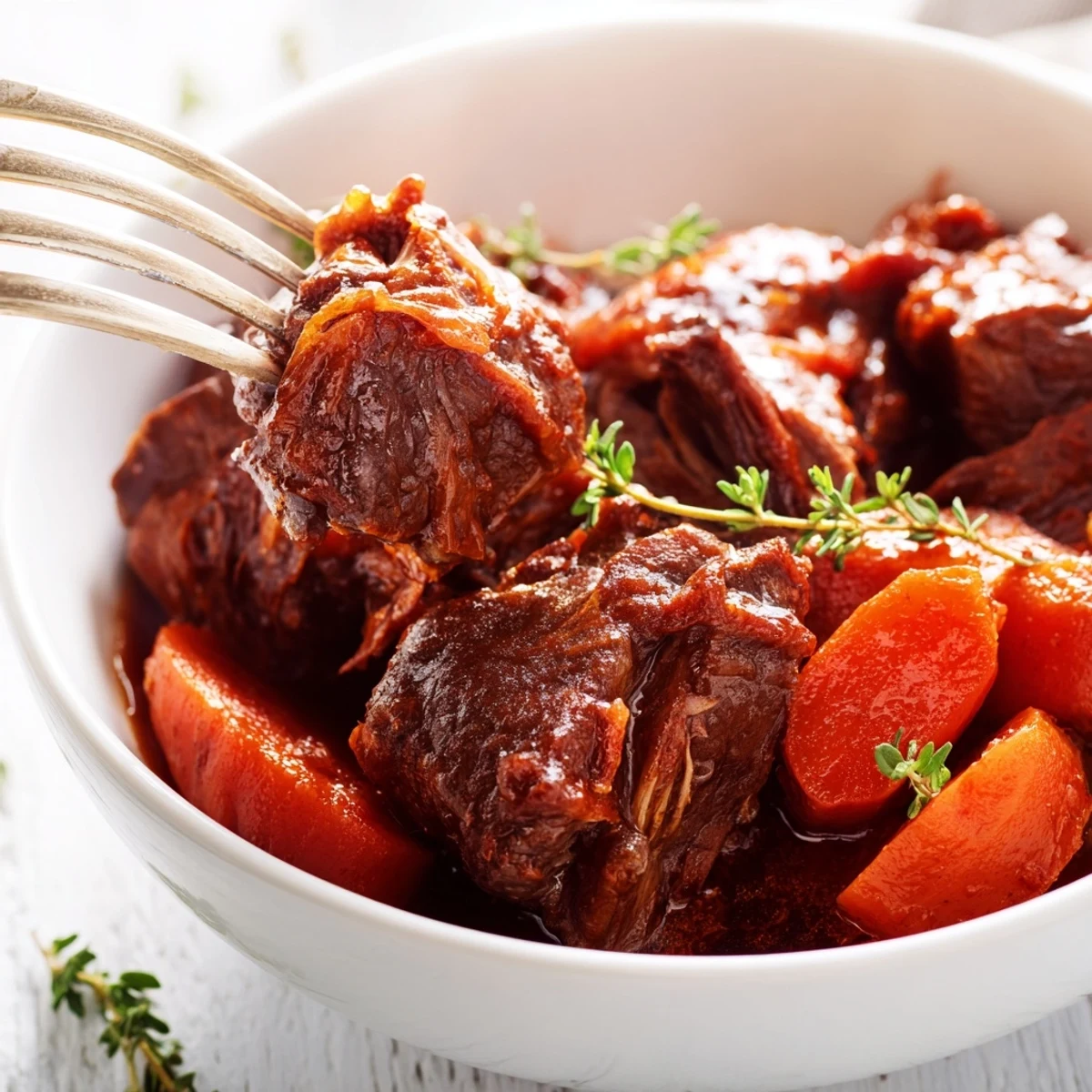
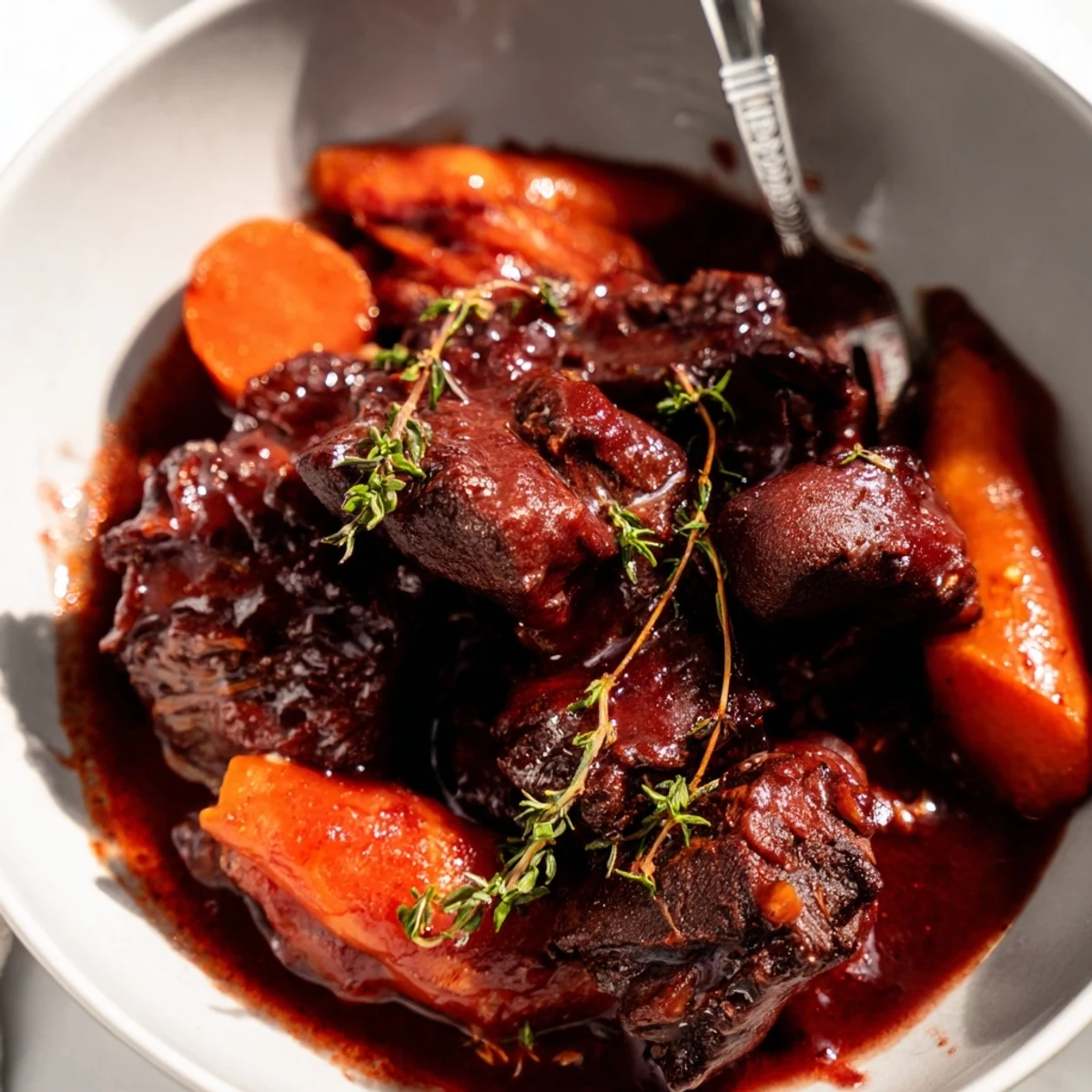
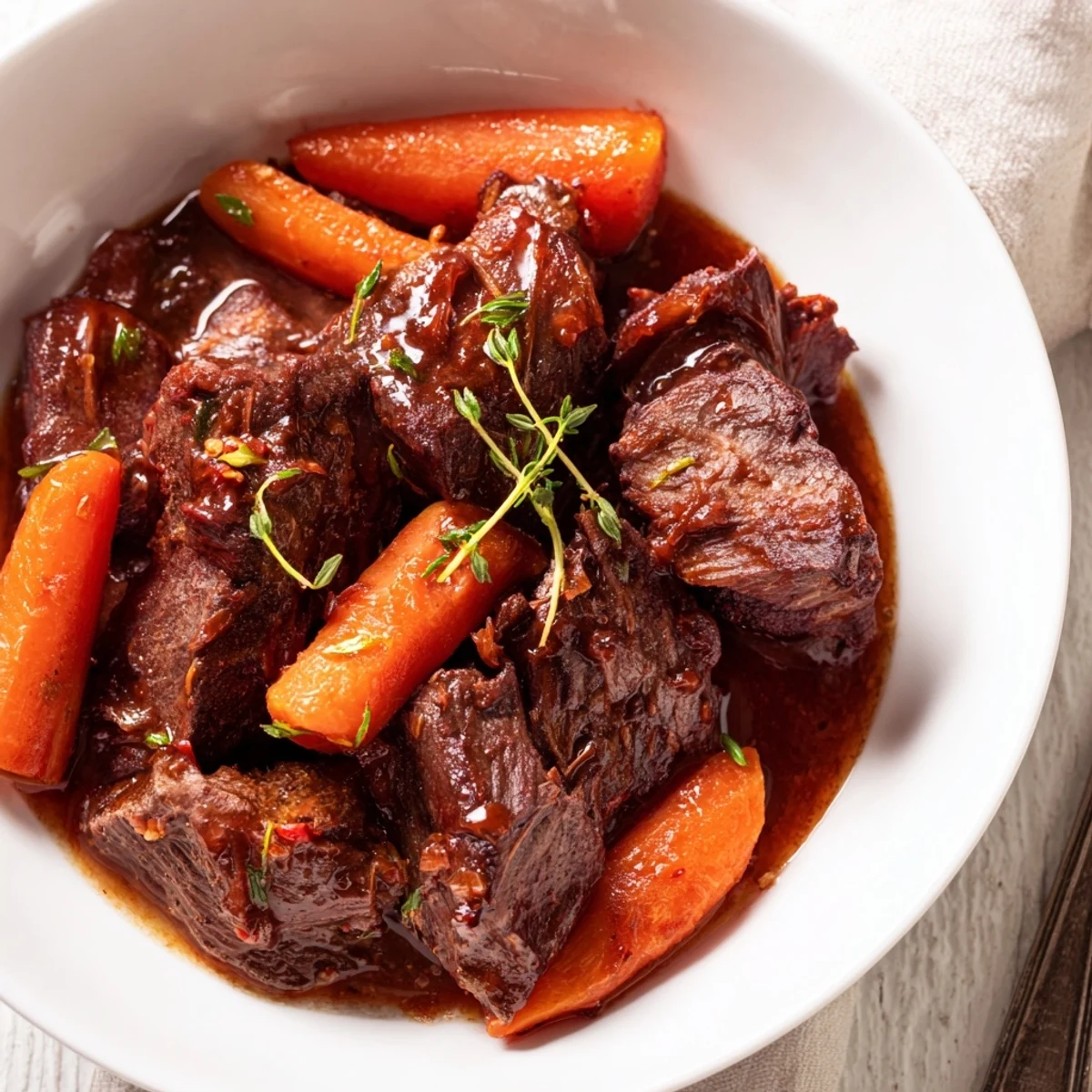
 This dish features beef shin slowly braised to tender perfection alongside sweet carrots and aromatic thyme. The beef is first browned to develop deep flavors, then simmered gently in red wine and beef stock until melt-in-your-mouth soft. The earthy herbs and vegetables create a richly flavored sauce that complements the succulent meat. Ideal for warming family meals, it pairs beautifully with mashed potatoes, crusty bread, or creamy polenta. This preparation ensures a hearty, gluten-free main course rich in protein and comforting textures.
There's something about the smell of beef shin braising in wine that fills a kitchen with the kind of warmth you can't bottle. Years ago, I watched my neighbor pull a clay pot from her oven, steam rising like a sigh, and knew I had to learn what she was making. That first bite—meat so tender it barely needed teeth—changed how I thought about patience in cooking. Now it's the dish I turn to when I want to slow down and let the oven do the work.
I made this for a dinner party once when I was still nervous about cooking for people who actually knew food. The table went quiet except for the clink of forks, and someone asked for seconds before finishing their first plate. That's when I stopped worrying about impressing anyone and just started cooking things I actually loved.
Ingredients
- Beef shin (1.2 kg in large chunks): Buy it from a butcher if you can; ask them to cut it for you and they'll tell you their tricks.
- Olive oil (2 tbsp): Good enough to taste, not your fanciest bottle—save that for finishing.
- Carrots (3 large, thick slices): They'll soften into the sauce and sweeten it naturally, so don't cut them thin.
- Onions and celery (2 medium onions, 2 stalks): The flavor foundation that nobody tastes directly but everybody notices when it's missing.
- Garlic (3 cloves, minced): A small amount goes a long way in something this slow-cooked.
- Beef stock (400 ml): Homemade is better, but good store-bought works if you check it's gluten-free.
- Dry red wine (200 ml): Use something you'd actually drink; the cheap stuff leaves a flat taste.
- Fresh thyme and bay leaves: The herbs that whisper through the whole dish without shouting—don't skip them.
- Salt and black pepper: Taste as you go; a braised dish needs seasoning at the end, not just the beginning.
Instructions
- Get the oven ready and heat your oil:
- Set your oven to 150°C (300°F) or use a slow cooker on low. Heat olive oil in a large casserole over medium-high heat until it shimmers slightly—that's when you know it's hot enough.
- Brown the beef properly:
- Pat the beef dry with paper towels, season it, then let each piece sit in the hot oil until it's deep golden. Work in batches so you're not crowding the pan; the meat needs space to brown, not steam.
- Build flavor with vegetables:
- Add the onions, carrots, celery, and garlic to the same pan and let them soften for about five minutes, stirring now and then. You'll notice the raw smell of onion starting to turn sweet and deep.
- Deglaze with wine:
- Return the beef to the pan, pour in the red wine, and let it bubble for two minutes. This loosens all those flavorful brown bits stuck to the bottom—that's liquid gold.
- Add stock and herbs, then braise:
- Pour in the beef stock, nestle in the thyme sprigs and bay leaves, and bring everything to a gentle simmer. Cover and transfer to the oven (or slow cooker) for 3 to 3½ hours, until the beef pulls apart with the gentlest pressure.
- Finish and taste:
- Fish out the thyme and bay leaves, then taste the sauce. Add more salt and pepper if it needs it—the long cooking mellows flavors, so the seasoning deserves a final check.
 Save to Pinterest
 I learned to make this dish properly the winter it snowed for three days straight. The pot simmered while the world outside went quiet and white, and by evening, the house smelled so good that neighbors joked about smelling dinner from their porches. Food tastes different when you're not rushing it.
Why Slow Cooking Changes Everything
Beef shin is the kind of cut that becomes magnificent only with time. The collagen in the meat breaks down into gelatin, and the muscle fibers soften until they're almost melting on your tongue. Low heat and a covered pot are what make this possible; high heat would toughen everything instead. Once you understand that, you stop thinking of braising as something complicated and start seeing it as simple patience.
What to Serve Alongside
The sauce this creates is too good to waste, so pick something to soak it up. Mashed potatoes are the obvious choice—creamy, warm, perfect for dragging through that wine-dark gravy. Crusty bread works just as well, especially if you tear it into pieces and use it like a spoon. Polenta, if you're in the mood to cook something else, adds a different kind of comfort.
Small Changes That Make It Your Own
This recipe is sturdy enough to handle a few swaps without losing its character. Parsnips or turnips can replace some of the carrots, bringing a slightly different sweetness and earthiness. You could add a handful of mushrooms, or a splash more wine if that's what you're in the mood for. The point is that once you understand the basic idea—meat, vegetables, liquid, time—you can adjust it based on what's in your kitchen or what you're craving.
- A Malbec or Syrah pairs beautifully both in the pot and in your glass.
- Make extra and freeze it; this dish actually tastes better after a day or two.
- If you use a slow cooker, give it 7 to 8 hours on low instead of 3½ hours in the oven.
 Save to Pinterest
 This is the kind of dish that makes you feel taken care of, whether you're cooking it for yourself or for people you love. It asks for your time but gives back something warm and filling that sticks with you long after dinner ends.
Common Questions
- → What cut of beef is ideal for this dish?
-
Beef shin is preferred for its collagen-rich texture that softens beautifully during slow cooking, resulting in tender, flavorful meat.
- → Can I use dried thyme instead of fresh?
-
Yes, 2 teaspoons of dried thyme can replace 6 fresh sprigs without sacrificing flavor in the slow braise.
- → What liquid ingredients enhance the flavor here?
-
Dry red wine combined with rich beef stock creates a deep, savory base that enhances the beef and herbs during cooking.
- → How do I achieve a thicker sauce from this dish?
-
Removing the lid during the last 30 minutes of cooking allows some liquid to evaporate, or stirring in a cornstarch slurry can thicken the sauce.
- → What sides best complement this beef preparation?
-
Mashed potatoes, crusty bread, or creamy polenta are excellent accompaniments that balance the rich flavors and textures.
- → Is this dish gluten-free?
-
Yes, provided the beef stock used is gluten-free and no gluten-containing ingredients are added.