
 Save to Pinterest
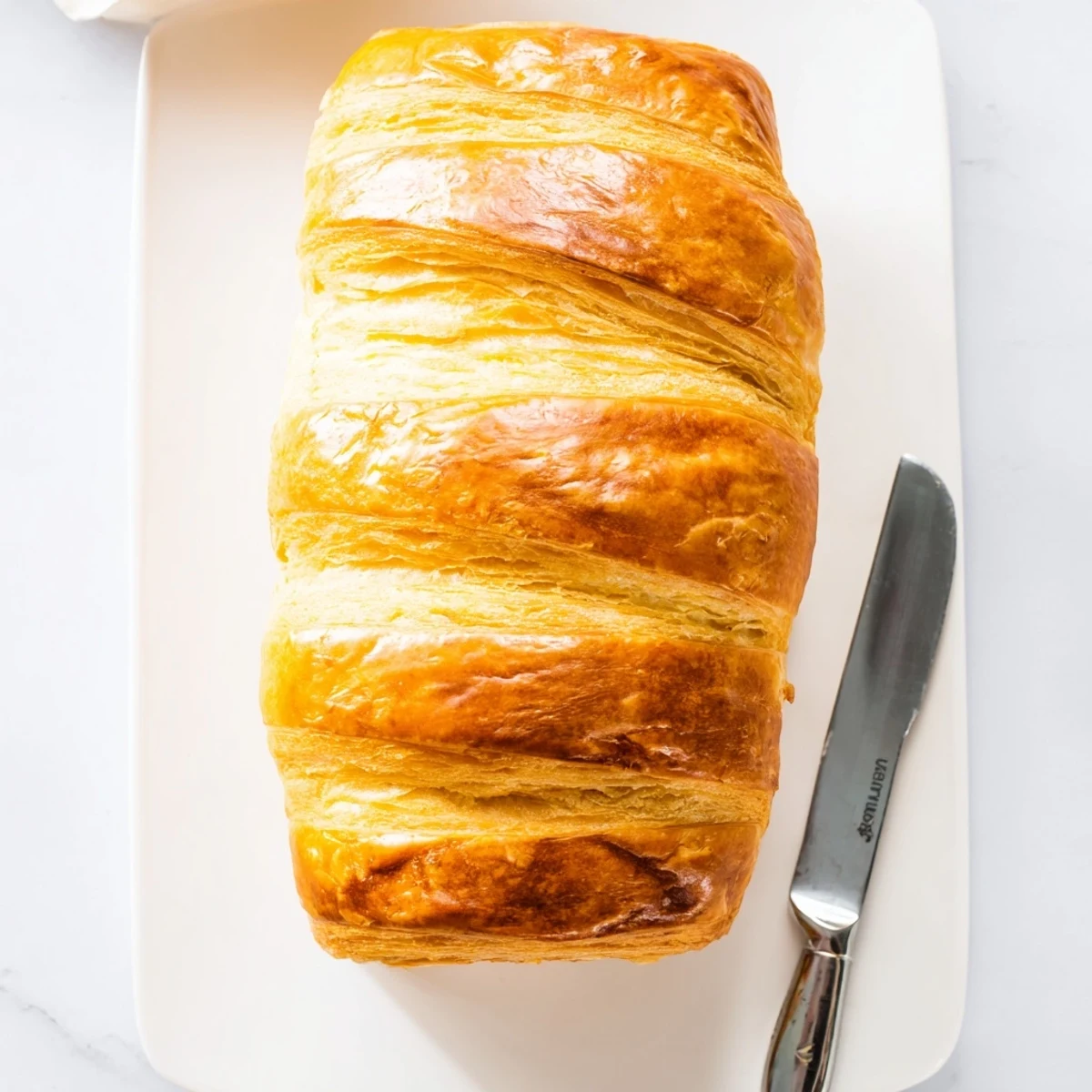
 This French-style loaf delivers all the buttery, flaky satisfaction of croissants in an easy-to-slice format. Through precise lamination technique, layers of cold butter create tender strands within each slice, resulting in golden crust and airy interior.
The process requires patience with multiple rolling and resting periods, but transforms simple ingredients into bakery-quality perfection. Ideal for weekend breakfast spreads, afternoon tea, or simply elevating your morning toast routine.
Serve warm with honey, jam, or enjoy the rich flavor on its own. Leftovers toast beautifully for crispy weekday treats.
There was something incredibly satisfying about waking up to the smell of baking butter on a lazy Sunday morning. My grandmother would somehow produce bakery worthy treats from her tiny kitchen, and when she revealed she'd made them herself, I was floored. Years later, I decided to tackle what seemed like an impossible project. After some spectacularly flat attempts, I finally found my rhythm.
I brought this to a brunch last fall, and people literally stopped mid conversation when I walked in with the warm loaf. The buttery aroma hits you before you even see it. One friend asked what bakery Id visited, and her jaw dropped when I told her my own kitchen had done the work.
Ingredients
- 3 ½ cups all-purpose flour: This forms the foundation of your dough, so resist the urge to swap in whole wheat or bread flour
- 3 tbsp granulated sugar: Just enough to balance the salt and help with browning without making it sweet
- 2 tsp instant yeast: Instant yeast skips the proofing step and gives reliable rise every single time
- 1 ½ tsp salt: This brings all the flavors forward and is absolutely essential to good bread
- 1 cup whole milk, lukewarm: The richness of whole milk makes all the difference in tender dough
- ¼ cup unsalted butter, melted: This goes into the dough itself for added tenderness
- 1 large egg: Adds structure and richness to the crumb
- 1 cup unsalted butter, cold: This creates those beautiful flaky layers, so keep it icy cold
- 1 large egg + 1 tbsp milk: Whisked together for that gorgeous golden finish
Instructions
- Mix your dough:
- In a large bowl, combine flour, sugar, salt, and yeast, keeping yeast away from direct salt contact. Pour in lukewarm milk, melted butter, and egg, then mix until you have a sticky, shaggy dough that holds together.
- Knead until smooth:
- Work the dough for 7 to 10 minutes until it feels smooth, elastic, and bounces back when pressed. Place in a greased bowl, cover, and let rise for 1 hour until doubled in size.
- First chill:
- Punch down the risen dough, shape into a rectangle, and refrigerate for 30 minutes. This rest relaxes the gluten and makes rolling so much easier.
- First fold and turn:
- On a lightly floured surface, roll dough into a 12 by 16 inch rectangle. Layer cold butter slices over two thirds of the dough, fold the unbuttered third over the butter, then fold the remaining third on top.
- Second fold and turn:
- Roll the folded dough into a 12 by 16 inch rectangle again, fold into thirds like a letter, wrap well, and chill for 30 minutes. Repeat this rolling, folding, and chilling process two more times for three total turns.
- Shape the loaf:
- After the final chill, roll dough to about 8 by 16 inches. Roll tightly from the short end into a loaf shape, place seam side down in a greased 9 by 5 inch loaf pan, and let rise until doubled, about 1 hour.
- Bake to golden:
- Preheat oven to 375°F, whisk egg with milk for the wash, and brush the loaf surface. Bake for 35 to 40 minutes until deeply golden and hollow when tapped, tenting foil if browning too fast.
- Cool completely:
- Let the loaf rest in the pan for 10 minutes, then move to a wire rack to cool fully before slicing into gorgeous layers.
 Save to Pinterest
 The first time I made this successfully, I sat at my kitchen table just staring at the slices. You could see every single buttery layer, and when I took that first bite, I actually laughed out loud. It was worth every failed attempt.
Patience Pays Off
The total time commitment might seem intimidating, but most of that is hands off resting and chilling. The actual work is maybe thirty minutes spread across several hours. Put on a podcast or some music and let the process be enjoyable rather than rushed.
Make It Your Own
Once you have mastered the basic technique, try sprinkling cinnamon sugar over the dough before that final roll. It creates a swirled breakfast bread that will absolutely ruin store bought bread for you forever. Jam smeared across warm slices is pretty much heaven.
Storage And Serving Tips
This bread stays fresh at room temperature for two days wrapped tightly, but the freezer is your friend for longer storage. Wrap cooled slices individually and freeze up to a month. Toast straight from frozen, and you would never know they had been frozen.
- Slices achieve maximum crispiness when toasted in a dry pan rather than a toaster
- If the loaf seems underbaked but the top is dark, tent with foil earlier next time
- Use a serrated knife in a gentle sawing motion to preserve those precious layers
 Save to Pinterest
 There is nothing quite like pulling a warm slice from a freshly baked loaf. Happy baking, friend.
Common Questions
- → What makes this different from regular bread?
-
The lamination technique creates distinct buttery layers throughout each slice, producing flaky texture similar to traditional croissants. This differs from standard bread where ingredients are fully incorporated.
- → Can I skip the chilling steps?
-
The chilling periods are essential for keeping butter cold during rolling. If butter melts into dough, you'll lose the characteristic flaky layers. Each rest ensures proper texture development.
- → How should I store leftovers?
-
Wrap tightly and store at room temperature for 2-3 days. For longer storage, freeze slices in airtight bags. Toast frozen slices directly without thawing for crispy results.
- → Why is my dough shrinking when rolling?
-
Dough shrinking indicates it needs more resting time. Gluten needs to relax between rolling sessions. Return to refrigerator for 20-30 minutes before continuing.
- → Can I use salted butter?
-
Unsalted butter provides better control over final flavor and helps achieve proper pastry texture. If using salted butter, reduce salt in dough by half to avoid excessive salinity.
- → What if I don't have a loaf pan?
-
Shape into a round boule and bake on a parchment-lined baking sheet. Adjust baking time slightly—check for golden color and hollow sound when tapped.